Pharmacist support 24/7

Breakthroughs in Peptide Based Cancer Vaccines A 2026 Clinical Preview

Author: Dr. Sarah Mitchell

As we move through 2026, the field of personalized immunotherapy has reached a pivotal milestone with the emergence of high-potency peptide-based cancer vaccines. These "neoantigen vaccines" are transforming the standard of care for patients with solid tumors, offering a highly targeted approach that trains the immune system to recognize and destroy malignant cells while sparing healthy tissue.

At Onco Medicine, we are committed to providing patients and clinicians with the latest insights and access to these breakthrough therapies. Peptide vaccines represent the next frontier in precision oncology, offering hope where traditional treatments may have limited efficacy.
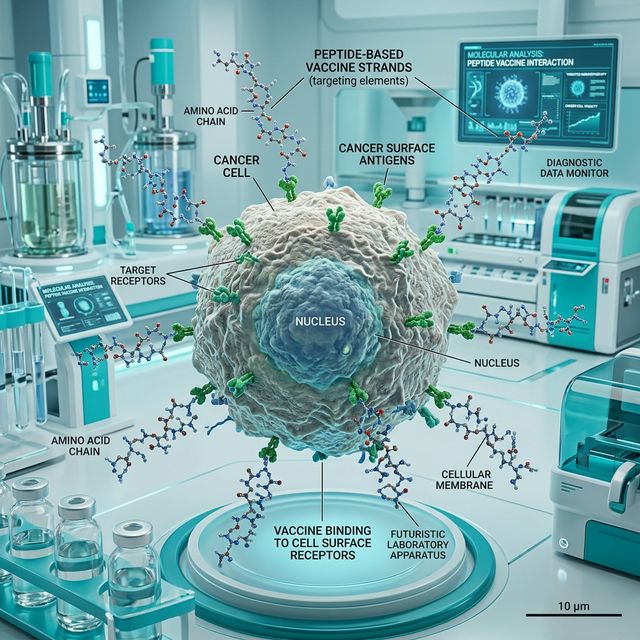
Molecular peptide strands targeting cancer cells in a clinical visualization

The Science of Peptide Precision

Peptide vaccines work by introducing short chains of amino acids—known as peptides—that mimic the unique proteins (neoantigens) found on the surface of a patient’s specific cancer cells. Once injected, these peptides act as a "training manual" for T-cells, the elite soldiers of the immune system. In 2026, advanced AI-driven sequencing allows us to identify these neoantigens with unprecedented speed and accuracy.

Why 2026 is the Breakthrough Year

  • Multi-Peptide Platforms: New delivery systems now allow for the simultaneous targeting of up to 20 different neoantigens, significantly reducing the risk of "tumor escape."
  • Enhanced Adjuvants: Innovative immune-stimulants are boosting the longevity of the vaccine response, providing years of "immunological memory" to prevent recurrence.
  • Rapid Synthesis: What used to take months now takes weeks. Personalized vaccines can be designed and manufactured in under 21 days for critical care patients.
  • Synergy with Checkpoint Inhibitors: Combining peptide vaccines with established therapies like Pembrolizumab (Keytruda) is showing superior clinical outcomes in Phase III trials.

Personalized medicine is no longer a concept of the future; it is the reality of today. By leveraging the patient’s own biology to fight the disease, we are moving toward a world where cancer is managed with the same precision as other chronic conditions. Onco Medicine remains your trusted bridge to these advanced pharmaceutical innovations.

Sources of Support:
Immunotherapy

Breakthroughs in Peptide Based Cancer Vaccines A 2026 Clinical Preview

D
Dr. Sarah Mitchell
March 28, 2026
Breakthroughs in Peptide Based Cancer Vaccines A 2026 Clinical Preview
Onco Medicine

At a glance

Evidence-informed overview from Onco Medicine. Key themes in this article:

  • Clinically reviewed framing
  • Safety & protocol awareness
  • Patient-relevant takeaways

Prefer to chat on WhatsApp?

Message our pharmacy team directly about this treatment — we reply with product details, sourcing, and next steps.

Chat on WhatsApp

As we move through 2026, the field of personalized immunotherapy has reached a pivotal milestone with the emergence of high-potency peptide-based cancer vaccines. These "neoantigen vaccines" are transforming the standard of care for patients with solid tumors, offering a highly targeted approach that trains the immune system to recognize and destroy malignant cells while sparing healthy tissue.

At Onco Medicine, we are committed to providing patients and clinicians with the latest insights and access to these breakthrough therapies. Peptide vaccines represent the next frontier in precision oncology, offering hope where traditional treatments may have limited efficacy.

Molecular peptide strands targeting cancer cells in a clinical visualization

The Science of Peptide Precision

Peptide vaccines work by introducing short chains of amino acids—known as peptides—that mimic the unique proteins (neoantigens) found on the surface of a patient’s specific cancer cells. Once injected, these peptides act as a "training manual" for T-cells, the elite soldiers of the immune system. In 2026, advanced AI-driven sequencing allows us to identify these neoantigens with unprecedented speed and accuracy.

Why 2026 is the Breakthrough Year

  • Multi-Peptide Platforms: New delivery systems now allow for the simultaneous targeting of up to 20 different neoantigens, significantly reducing the risk of "tumor escape."
  • Enhanced Adjuvants: Innovative immune-stimulants are boosting the longevity of the vaccine response, providing years of "immunological memory" to prevent recurrence.
  • Rapid Synthesis: What used to take months now takes weeks. Personalized vaccines can be designed and manufactured in under 21 days for critical care patients.
  • Synergy with Checkpoint Inhibitors: Combining peptide vaccines with established therapies like Pembrolizumab (Keytruda) is showing superior clinical outcomes in Phase III trials.

Personalized medicine is no longer a concept of the future; it is the reality of today. By leveraging the patient’s own biology to fight the disease, we are moving toward a world where cancer is managed with the same precision as other chronic conditions. Onco Medicine remains your trusted bridge to these advanced pharmaceutical innovations.

Sources of Support:


D

Dr. Sarah Mitchell

Dr. Sarah Mitchell is a lead clinical researcher specializing in genomic profiling and the application of targeted immunotherapy in oncology.

Continue your care journey

This article is for general education. For medicine availability, prescriptions, and orders, use our catalog and pharmacy team.

Chat on WhatsAppBrowse catalogTreatmentsContact pharmacistsUpload prescription

Related Articles

Therapeutic Cancer Vaccines Targeting Neoantigens Clinical Trial Updates

Immunotherapy

Therapeutic Cancer Vaccines Targeting Neoantigens Clinical Trial Updates

Read Article

Found this helpful?