Spatial Transcriptomics Mapping the Tumor Microenvironment in 3D for Precision Care
Author: Dr. Alan Varma
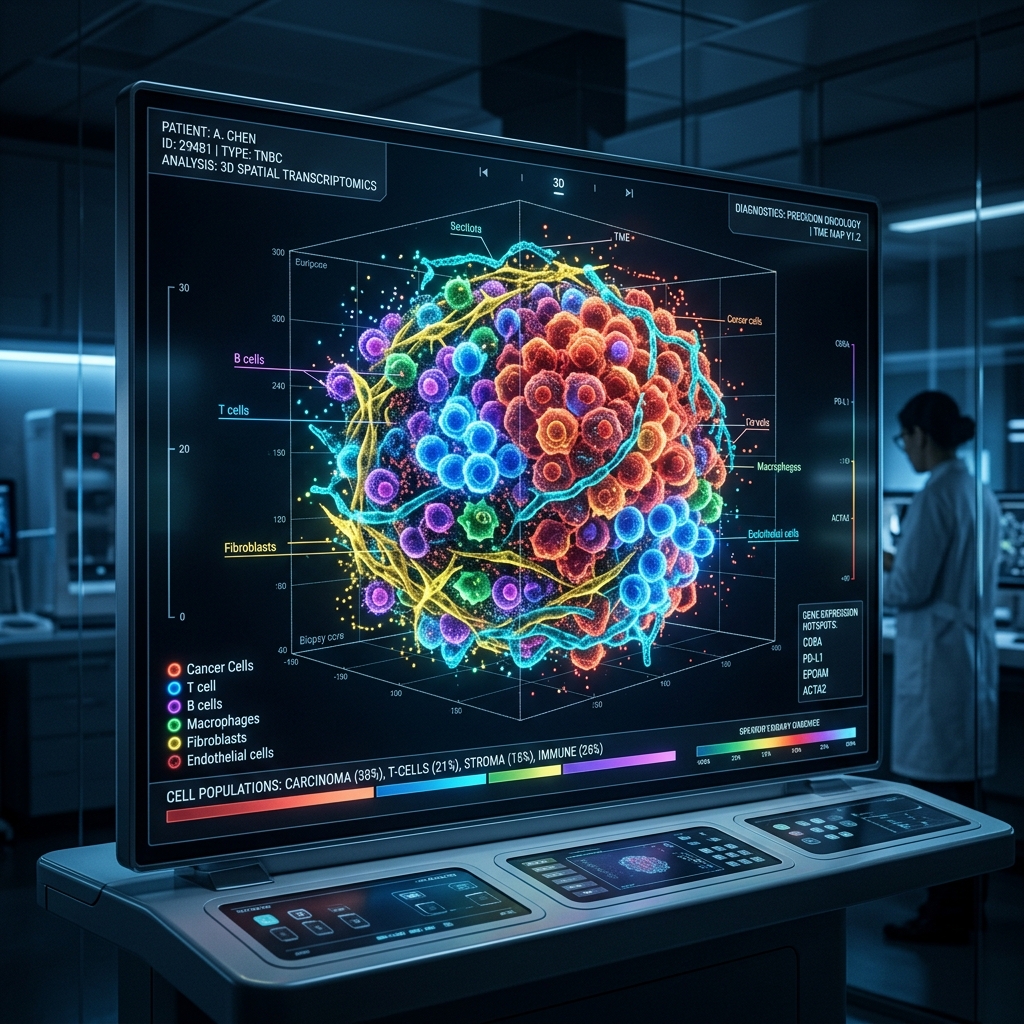
By early May 2026, oncology diagnostics have moved beyond identifying *what* mutations exist, to mapping *where* they exist. Spatial Transcriptomics allows scientists to see exactly which genes are active in different geographic locations within a single tumor, creating a high-resolution 3D map of the Tumor Microenvironment (TME).
At Onco Medicine, we recognize that understanding the "neighborhood" of the tumor is critical for precision care. This technology reveals how cancer cells interact with surrounding immune cells, blood vessels, and fibrous tissue.
The Clinical Value of 3D Tumor Mapping
- Predicting Immunotherapy Response: By mapping the exact location of exhausted T-cells versus active immune cells within the tumor, spatial transcriptomics can predict whether a patient will respond to checkpoint inhibitors.
- Identifying Resistance Niches: The technology can locate specific "pockets" within the tumor where cells have altered their gene expression to survive chemotherapy, guiding the use of combination therapies.
- Personalized Drug Delivery: Understanding the physical barriers (like dense fibrous tissue) within the tumor helps oncologists select therapies—like specific nanobots or ADCs—that are physically capable of penetrating the malignancy.
Science-driven recovery relies on comprehensive intelligence. Spatial transcriptomics is transforming the tumor from a "black box" into a clearly defined map. Onco Medicine is your partner in utilizing these advanced diagnostics to guide optimal therapeutic choices.