The Rise of Bio Simulation Reducing Animal Testing in Drug Development
Author: Dr. Sarah Mitchell
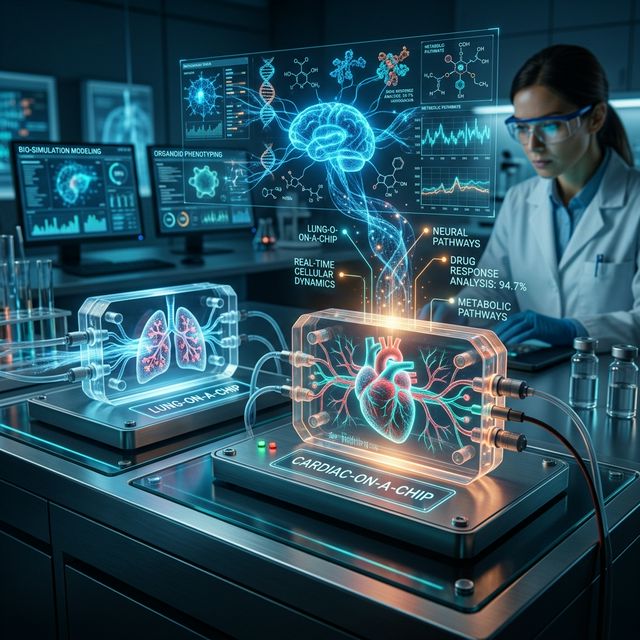
The future of drug development is shifting from traditional animal models to high-fidelity bio-simulations. As we enter 2026, "Organs-on-a-Chip" and advanced computer modeling are providing more accurate predictions of human response than ever before.
At Onco Medicine, we are championing the transition to these ethical and highly efficient testing methods. By simulating human physiology at the molecular level, we can identify potential side effects and therapeutic benefits with surgical precision, significantly reducing the reliance on animal testing.
The Power of Virtual Physiology
Bio-simulation involves creating complex mathematical models of biological systems. These "Digital Twins" of human organs allow researchers to test how a new drug interacts with specific tissues without any risk to living subjects. In 2026, these simulations have reached a level of sophistication where they can mimic the blood-brain barrier, liver metabolism, and cardiac rhythms with over 90% accuracy.
Key Advantages of Bio-Simulation
- Ethical Advancement: Dramatically reducing the need for animal models in early-stage research.
- Human-Centric Data: Testing directly on simulated human cells provides more relevant data for clinical trials.
- Accelerated Timelines: Simulations can run thousands of scenarios in the time it takes to conduct a single physical experiment.
- Cost Efficiency: Reducing the immense overhead associated with traditional laboratory animal care and testing.
Sources of Support: